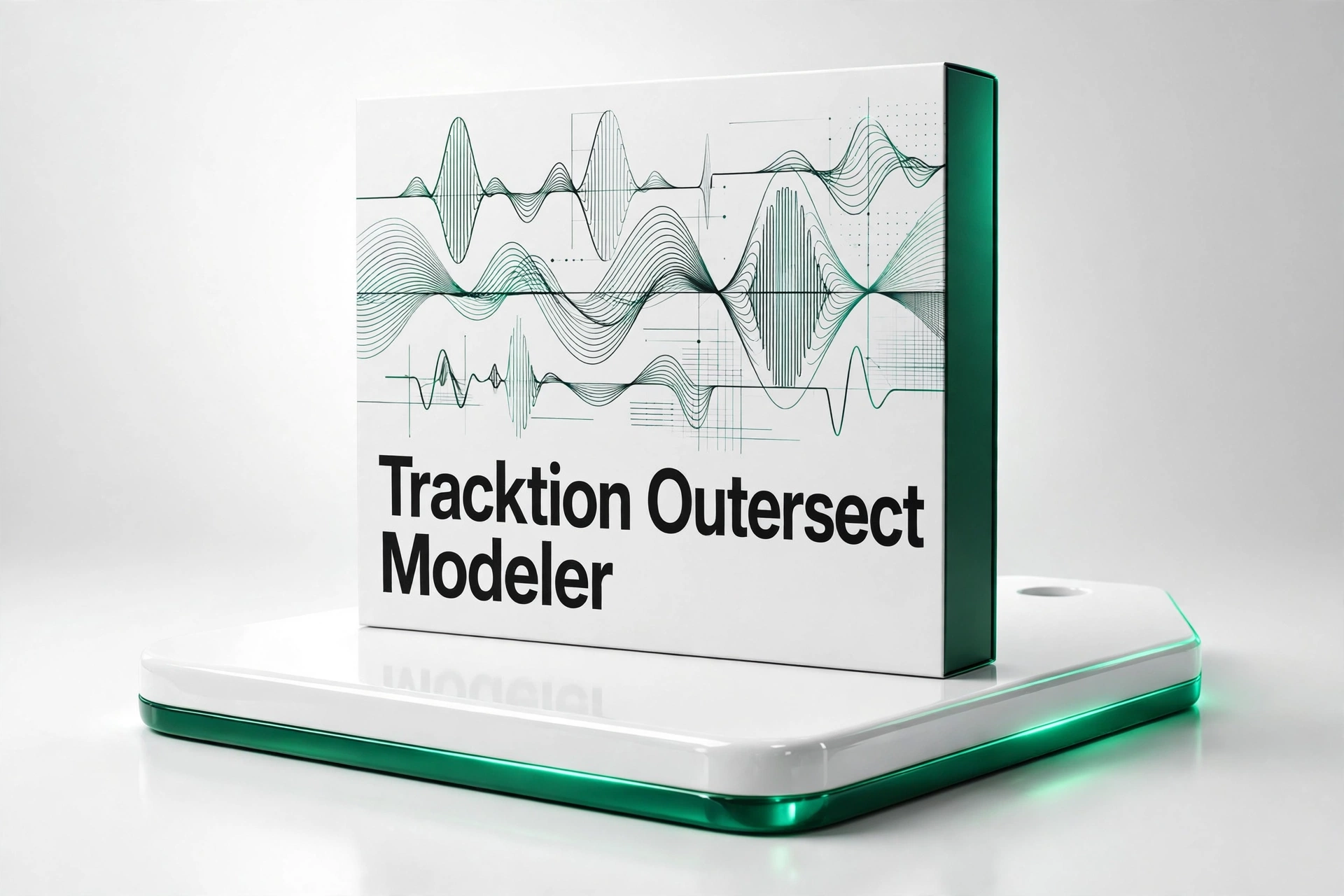
Here is the different one. Tracktion Outersect Modeler does not play back recordings and does not do subtractive filtering tricks — it simulates the behaviour that produces sound, using proprietary physical-modeling algorithms by designer Rob Rayle. The same note genuinely becomes a different note depending on how you arrive at it, which is why keyboard players and expressive performers keep circling back to this instrument. It is on the board at $59.99 against a $129 list price — 53% off a premium-niche instrument that almost never competes on price.
Four Model Families, Running Simultaneously
Modeler’s engine can run plucked-string, bowed-string, reed and brass models at the same time, and their simultaneous availability is the point: instead of treating them as sealed preset categories, you can explore hybrid instruments that would be extremely difficult or impossible to build in the physical world. The behaviours that make real instruments feel alive are modelled rather than sampled — natural and artificial harmonics, flute-style overblowing when pressure pushes a note into a higher harmonic mode, flutter tongue, saxophone-style growl, and controlled electric-guitar-style feedback blooming out of a synth patch. Bowed models can keep injecting energy for sustained, singing lines; plucked models give you the foundation for string-inspired sounds; and because the performance drives the model, organic variation and the occasional beautiful accident are features, not bugs.
Deep Engine, Single-Page Interface
Physical modeling this deep could easily bury you in pages, but the core synthesis interface fits on one page, described in the language of instruments and performance techniques rather than abstract mathematics. The Body Filter combines low-pass and high-pass filtering with six fully modulatable parametric bands, so resonant structure can move during a performance instead of sitting fixed. Stereo imaging pickups position the sound at the synthesis level, and built-in stereo delay, chorus and reverb finish patches without extra plugins. Modulation routing stays deliberately simple — a knob can be modulated from a source in roughly two clicks — and full automation plus MIDI Learn put the engine under your DAW’s and your controller’s command.
MPE When You Want It, MIDI When You Don’t
Current versions support MPE, with the Settings panel offering a choice of MPE Mode or Classic MIDI Mode (version 1.21 and later). With an expressive controller, individual notes get independent control — ideal for an engine that responds to performance input this directly. Without one, you lose nothing essential: string patches include hammer-on and pull-off style techniques designed for conventional MIDI keyboards, and Classic MIDI Mode runs the whole instrument from standard studio equipment. The pedigree matters too: Rayle has experimented with physical modeling since 2004, his development background includes code for Pro Tools and the S6 console and work associated with numerous Roland products, and the Modeler concept began life on the now-discontinued Kyma Capybara hardware before Tracktion brought it to standard plugin and standalone formats. The factory sound sets — including ethereal soundscapes by Yuli Yolo — were refined over years for production and live performance alike.
The Deal Maths
Expressive instruments are a premium niche with premium pricing habits, which makes $59.99 — a $69 saving on the $129 list — a comfortable way in. Modeler runs on macOS 10.13 or later (Intel and Apple Silicon) and Windows 10 or 11, in 64-bit AAX, AU (Mac) and VST3 formats plus standalone. If your productions lean on acoustic or electro-acoustic colour but you are tired of paying for it one static library at a time, this single engine covers the ground — and at 53% off, the experiment is priced like a plug-in, not a commitment.
Who Reaches for Modeler
Expressive solo work is the obvious home — leads that can occupy the role of a vocal, a violin or a guitar solo — but the engine’s range runs wider: cinematic scoring, ambient and experimental music, hybrid acoustic-electronic productions, film and game sound design, and live keyboard performance where an instrument that reacts beats an instrument that repeats. If your music asks sounds to behave rather than merely play back, Modeler is the shortlist.







 Download instantly from Plugboutique
 Instant Digital Delivery
 Free 2-Day returns if not work












Reviews
Clear filtersThere are no reviews yet.