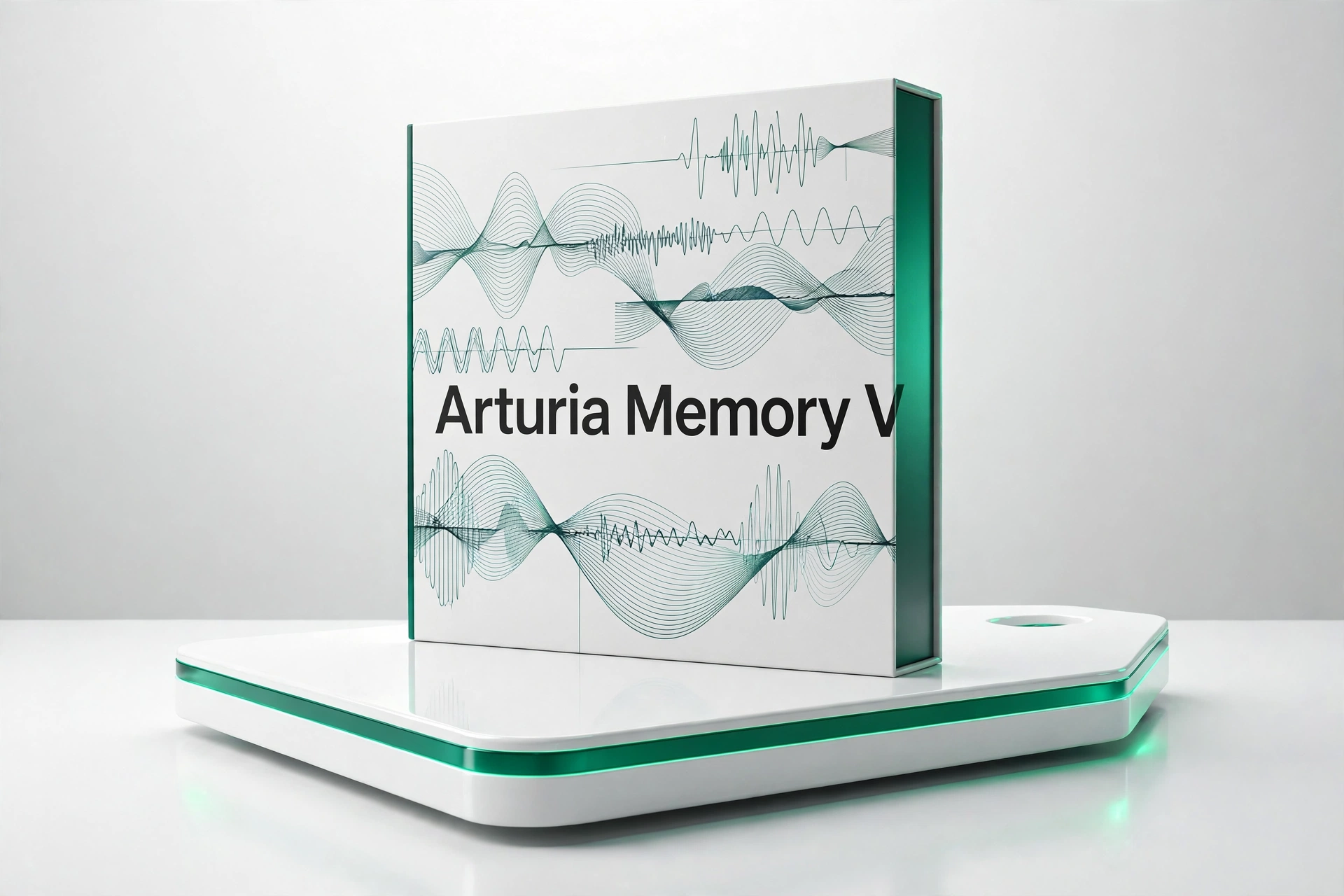
Some vintage synths are famous. The Memorymoog is feared — in the best way. When Moog answered the polyphonic era in 1982, it did not build a polite keyboard: it built six voices with three oscillators apiece, all breathing through the ladder filter that defined an era of analog weight. Arturia’s Memory V recreates that machine in software, strips out the repair bills and the tuning anxiety, and prices the whole legend at $39.99. No markdown gimmicks on this one — the value here is simply how much analog authority you get for the price of a night out.
Three Oscillators, One Ladder, Endless Weight
The architecture is the original’s, faithfully kept: triple analog oscillators per voice, the classic ladder filter, analog drive circuitry and a polyphonic voice structure with unison performance modes for when a patch needs to occupy the whole stereo field. A vintage dispersion control lets you dial in the component drift that made every hardware unit slightly, gloriously different from the next — that living instability is a big part of why these sounds sit in a mix like machinery warming up rather than samples sitting still. Chords come out thick, basses come out enormous, and brass stabs carry the kind of authority modern thin-sounding synths spend their whole modulation budget chasing.
The 1982 Machine, Minus the 1982 Limits
Arturia’s habit is to recreate first and extend second, and Memory V follows the pattern. Polyphony is expanded well past what the hardware offered, and the modulation system is thoroughly modern: drag-and-drop assignment, multiple LFOs, advanced envelopes, voice modulation, random generators and macro controls, plus MPE support for players who shape notes after the attack. A four-layer Multi-Arp system turns held chords into interlocking melodic machinery, and the effects section — reverb, delay, chorus, analog-flavoured processing and flexible multi-FX routing — finishes patches inside the instrument. The result plays like 1982 and behaves like a current production tool.
Three Hundred Doors Into the Sound
The library ships with over 300 professionally designed presets, and the categories tell you exactly where this synth earns its keep: analog basses, vintage brass, synth leads, cinematic pads, ambient textures, polyphonic keys, retro synthwave patches and electronic sequences. Synthwave and retro productions are obvious homes, but the same engine serves EDM, house and techno producers who want real analog grit under modern arrangements, and film and ambient composers who need pads with genuine harmonic movement. Start from a preset, lean on the dispersion, and the patch is yours within minutes.
Reliability the Original Never Had
Owning the hardware meant owning its maintenance schedule too. Memory V keeps the character — the classic analog instability, the drifting oscillators, the filter behaviour — while delivering modern reliability and workflow: presets recall instantly, instances multiply across a session, and nothing needs warming up or sending to a technician. It runs on Mac and Windows in VST3, AU and AAX, at home in every major DAW.
At Home in Every Modern Session
However you work, Memory V reports for duty in the right uniform: VST3, AU and AAX formats across FL Studio, Ableton Live, Logic Pro X, Cubase, Studio One, Bitwig Studio, Reaper and Pro Tools, on both Intel and Apple Silicon Macs and on Windows 10 and 11. That breadth matters for a synth with this range — the same instrument scoring a synthwave record on Monday can be stacking vintage brass under a house track on Friday, holding an ambient piece together with a drifting pad on the weekend, and nobody has to bounce, convert or compromise along the way. It is a vintage soul with a modern passport, and it stamps in everywhere.
The Deal
At $39.99, this is the inexpensive seat in Arturia’s V Collection world: one legendary polysynth, modelled down to its drift, with modern modulation, a four-layer arpeggiator, effects and more than 300 presets included. There is no percentage to quote because the price never needed one — forty dollars for the Memorymoog architecture is the deal, stated plainly. If your tracks have been missing real analog weight, this is the cheapest honest way to put it back.







 Download instantly from Plugboutique
 Instant Digital Delivery
 Free 2-Day returns if not work













Reviews
Clear filtersThere are no reviews yet.