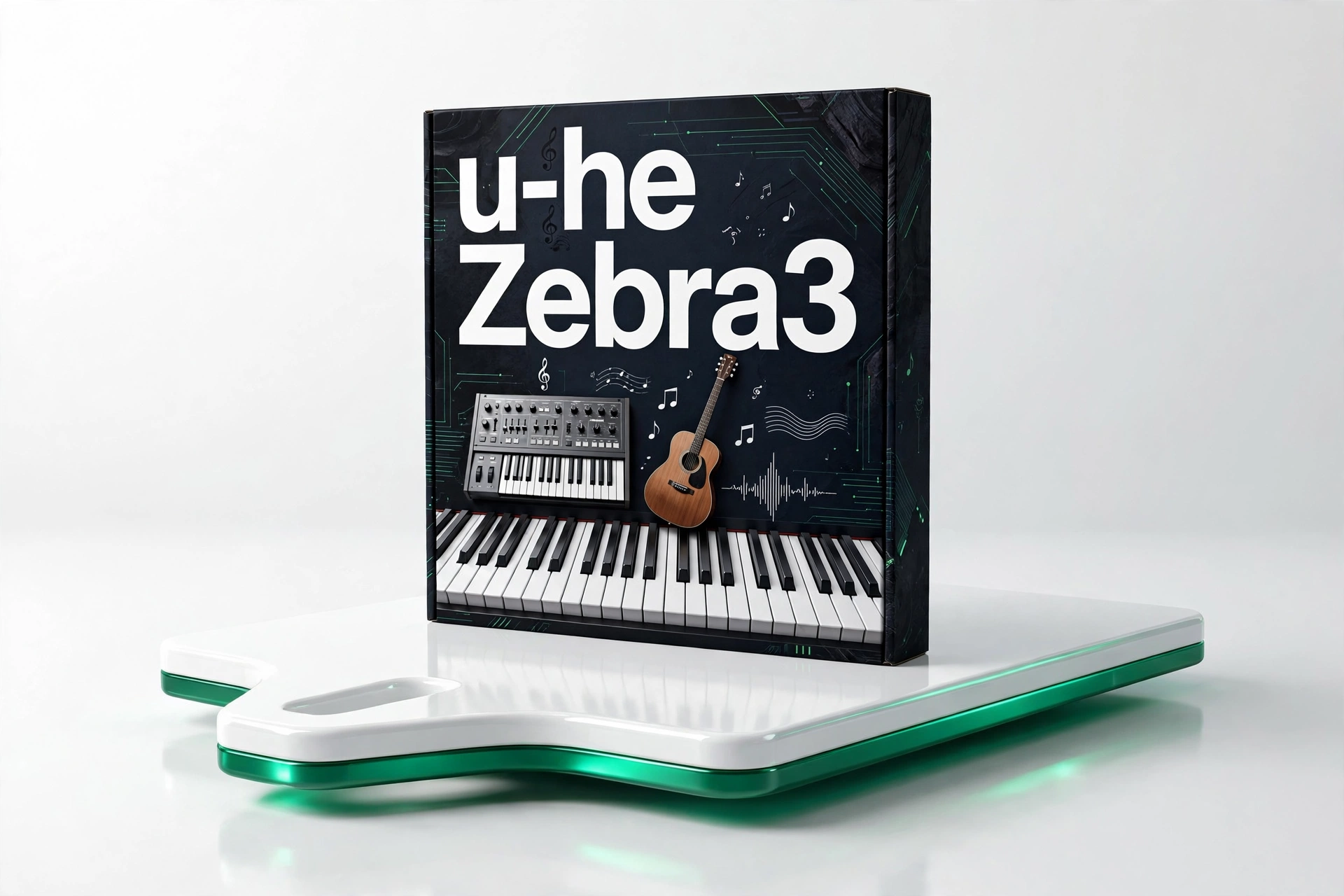
Some synths are products. Zebra is an institution — the modular instrument film composers and serious sound designers swore by for two decades, because its grid could route almost anything into almost anything and the sounds that fell out were like nothing fixed-architecture synths could reach. Zebra3 rebuilds that engine for the modern session: new oscillator types, a more flexible routing architecture, a deeper modulation system — and it sits on this board at $49.99. A flagship modular synth with this pedigree, priced under most single-oscillator instruments, is the kind of listing deal hunters screenshot.
Rebuilt, Not Refreshed
Zebra3 introduces significant improvements over its predecessor, starting with the sound sources: new oscillator types including wavetable and FM synthesis expand the palette beyond what Zebra 2 offered, alongside classic analog models for the warm end of the spectrum. The modular signal path remains freely configurable — synthesis modules arranged and routed to taste — so the instrument can be a polite analog polysynth on one patch and an experimental system that barely qualifies as a keyboard instrument on the next. High-quality filters with multiple character options, extensive unison modes for wide, thick sounds, and flexible voice stacking and polyphony management give the raw material its finish.
Modulation Depth for People Who Hear in Systems
The enhanced modulation system adds more LFO shapes, envelope types and modulation targets, with MIDI sources and a comprehensive MIDI learn and macro control system tying the depth to your hands. A powerful arpeggiator and sequencer handle the rhythmic patches, and a new effects section — chorus, delay, reverb and distortion — processes sounds inside the instrument. This is the environment sound designers use to build sounds that would be difficult or impossible in conventional synthesizers: evolving systems, performable textures, and instruments custom-built for a single score or record.
The Legacy Comes With It
Crucially, Zebra3 maintains complete compatibility with Zebra 2 presets. Twenty years of sound design — the libraries, the film-score patches, the community’s accumulated work — remains usable on day one, which means the $49.99 buys into an ecosystem years deep rather than an empty browser. Its loyal following among professional film and game composers is earned the same way: a unique sound character and extreme flexibility that keep it in the template long after trendier synths rotate out. It runs on Mac and Windows in the formats major DAWs expect.
The Sound Designer’s Workbench
Film and game audio is where Zebra’s architecture earns its legend most visibly. A creature vocalisation might need an FM growl layered through a wavetable sweep, modulated by three envelopes arguing with each other; a vehicle pass might need analog weight animated by the sequencer; a magical texture might need unison stacks detuned into a shimmering field. Fixed-architecture synths make you approximate those ideas. Zebra3’s freely configured modules, multiple filter characters and deep modulation targets let you construct them literally, then save the construction as a preset your whole team can recall. Add the comprehensive MIDI learn and macro system, and those constructions become performable instruments rather than frozen renders — which is why scoring templates keep a Zebra instance permanently loaded.
Effects and Performance Inside the Patch
The built-in effects section — chorus, delay, reverb and distortion — is integrated rather than appended, so spatial and saturation choices become part of the sound design itself and travel with the preset. The arpeggiator and sequencer turn held chords into rhythmic engines for pulses and tension beds, the backbone of modern scoring. Voice stacking and polyphony management decide how massive a unison patch can get before it eats the mix, and the high-quality filters offer multiple characters for the final shaping. Everything serves the same principle that built the Zebra name: the instrument should never be the reason an idea got smaller.
The Deal
Flagship modular synths are supposed to cost flagship money and demand flagship commitment. Zebra3 at $49.99 breaks both rules at once: the rebuilt engine, the expanded oscillators, the modulation depth and the inherited Zebra 2 library, for less than many preset packs charge. No percentage theatre — the comparison is against every other modular flagship on the market, and it is not close. Board it, load a legacy preset to hear where the legend started, then start routing things into each other and find out where it goes now.





 Download instantly from Plugboutique
 Instant Digital Delivery
 Free 2-Day returns if not work







Reviews
Clear filtersThere are no reviews yet.